
WEA 2026 will be honoured by the following international Plenary Speakers !!!
Prof. Emilio Carrizosa Ph.D. – University of Sevilla, Spain
Webpage: https://www.us.es/trabaja-en-la-us/directorio/emilio-j-carrizosa-priego
Google Scholar: https://scholar.google.com/citations?user=vzZSzdYAAAAJ&hl=es
LinkedIn: https://www.linkedin.com/in/emilio-carrizosa-1a6b73/
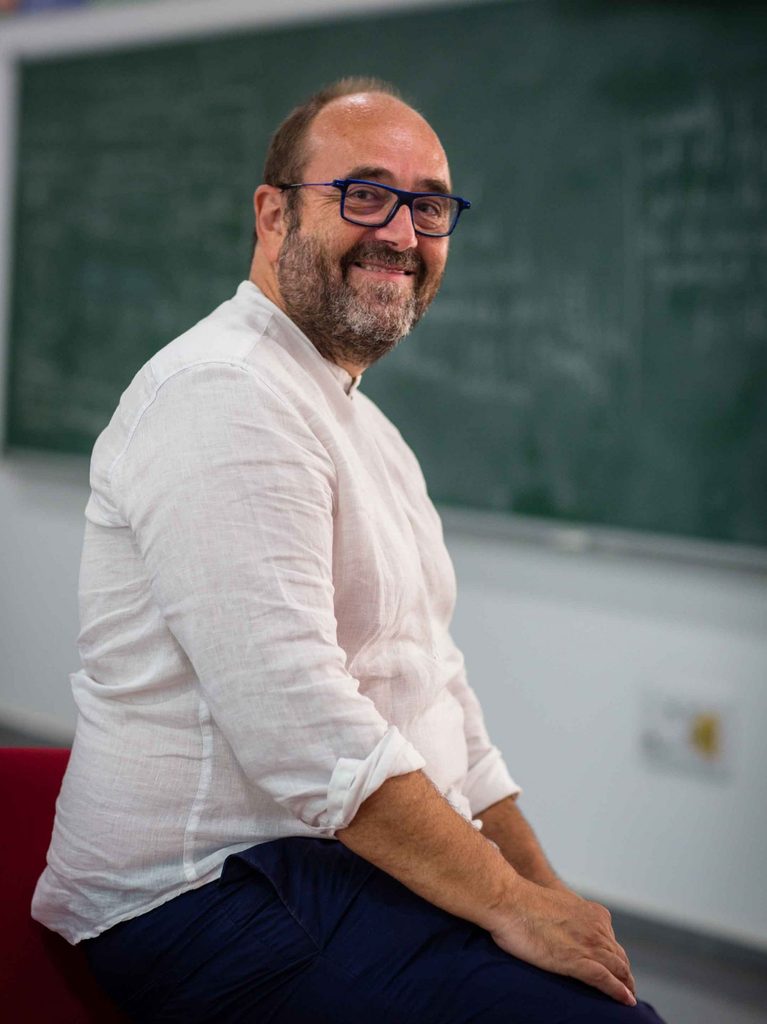
Talk: “Machine Learning made (more) explainable and robust with Multiobjective Optimization“
Bio: Emilio Carrizosa is Full Professor of Statistics and Operations Research in the University of Seville, Spain, since May 18 2005. His research interests include: Industrial and Applied Mathematics; Data Science (Explainable and Fair Machine Learning, Supervised Classification and Regression), Mathematical Optimization and Operations Research (Mixed Integer Nonlinear Programming, Global Optimization, Vector Optimization). He is President of math-in, the Spanish Network of Industrial Mathematics, member of the Council of ECMI (European Consortium for Mathematics in Industry) and EU-MATHS-IN, member of the international advisory board of the Danish Academy of Data Science, and of CITMAGa (Centro de Investigación y Tecnología Matemática de Galicia).
He has served as Director of IMUS, the Mathematical Institute of the University of Seville, as President of SEIO, the Spanish Statistics and OR Society, and as Editor-in-Chief of TOP- Transactions in Operations Research. He has (Scopus: May 18h 2025) 155 publications with 2,286 citations (1,032 in the period 2021-
2025), yielding an h-index of 27. He has papers in top journals in the area Operations Research and Management Science: Operations Research (2), Mathematical Programming (6), Management Science (1), Mathematics of Operations Research (4), Omega (4), European Journal of Operational Research (26), Computers & OR (21). Due to his interdisciplinary research, he has also published in disciplines beyond OR: Statistics and Probability (Biostatistics, ADAC, Bayesian Analysis, CSDA, J Multi- variate Analysis, J of Applied Probability), Energy (Applied Energy, Solar Energy, International Journal of Energy Research), Chemical Engineering (Computers & Chemical Engineering, Industrial & Engineering Chemistry Research), Hydrology (J of Hydrology). The Spanish Research Agency has acknowledged 5 research periods (5 sexenios de investigación): 1990-95, 1996-01, 2002-07, 2008-13, 2014-19.
He has supervised 17 PhD Theses (plus 3 ongoing in the University of Seville), 6 of them awarded with various national and international prizes: Jasone Ramírez-Ayerbe (Prize SEIO-FBBVA 2024), Vanesa Guerrero (L’Oréal- Unesco Prize for Women in Science 2024, Premio Extraordinario de Doctorado Universidad de Sevilla, Research Award Vicent Caselles RSME-FBBVA, Research Award Ramiro Melendreras SEIO 2018), Sandra Benítez-Peña, M. Asunción Jiménez-Cordero, Remedios Sillero-Denamiel (Premio Extraordinario de Doctorado Universidad de Sevilla), Cristina Molero-Río (Classification Society Distinguished Dissertation Award 2022).
He has received awards such as the SEIO Medal 2024 (Operations Research), the SEIO-FBBVA Award 2024 to the best paper in Statistics and Operations Research applied to Big Data and Data Science, the Excellence FAMA Award 2020 (branch: Sciences) in the University of Seville, the Award Academia Sevillana de Ciencias for young researchers (1998) and the Doctoral Award in the PhD in Mathematics in the University of Seville (1993).
He is involved in Transfer of Knowledge activities. He has been leading researcher in industrial projects and contracts in applications of OR to different sectors: Energy (Repsol, Abengoa, TSK Flagsol), Health (UDX), Logistics (Azur Global Business SL), Information Technologies (Junta de Andalucía), and also participating in contracts on Environment (Junta de Andalucía), Smart cities (IMESAPI), Logistics (Portel). Since 2022 he is Scientific Advisor of the OR-IA company OGA. The Spanish Research Agency has acknowledged 1 transfer of knowledge period (1 sexenio de transferencia) – 2013.
He has an intense activity of outreach, participating in debates and interviews in TV, radio and newspapers on industrial mathematics and teaching mathematics.
Prof. Oscar Castillo Ph.D. – Instituto Tecnológico de Tijuana, Mexico
Webpage: http://www.hafsamx.org/castillo/
Google Scholar: https://scholar.google.com.mx/citations?user=fF1nviQAAAAJ&hl=es
LinkedIn: https://mx.linkedin.com/in/oscar-castillo-b625aab5
Talk: “Optimization of Type-2 and Higher Type of Fuzzy Systems for Applications“
Bio: Oscar Castillo holds the Doctor in Science degree (Doctor Habilitatus) in Computer Science from the Polish Academy of Sciences (with the Dissertation “Soft Computing and Fractal Theory for Intelligent Manufacturing”). He is a Professor of Computer Science in the Graduate Division, Tijuana Institute of Technology, Tijuana, Mexico. In addition, he is serving as Research Director of Computer Science and head of the research group on Hybrid Fuzzy Intelligent Systems. Currently, he is President of HAFSA (Hispanic American Fuzzy Systems Association) and Past President of IFSA (International Fuzzy Systems Association). Prof. Castillo is also Chair of the Mexican Chapter of the Computational Intelligence Society (IEEE). He also belongs to the Technical Committee on Fuzzy Systems of IEEE and to the Task Force on “Extensions to Type-1 Fuzzy Systems”.
He is also a member of NAFIPS, IFSA and IEEE. He belongs to the Mexican Research System (SNI Level 3). His research interests are in Type-2 Fuzzy Logic, Fuzzy Control, Neuro-Fuzzy and Genetic-Fuzzy hybrid approaches. He has published over 300 journal papers, 10 authored books, 40 edited books, 200 papers in conference proceedings, and more than 300 chapters in edited books, in total 910 publications according to Scopus (H index=63, and more than 1050 publications according to Research Gate (H index=74 in Google Scholar).
He has been Guest Editor of several successful Special Issues in the past, like in the following journals: Applied Soft Computing, Intelligent Systems, Information Sciences, Non-Linear Studies, Fuzzy Sets and Systems, JAMRIS and Engineering Letters. He is currently Associate Editor of the Information Sciences Journal, Applied Soft Computing Journal, Engineering Applications of Artificial Intelligence, Granular Computing Journal and the International Journal on Fuzzy Systems. Finally, he has been elected IFSA Fellow in 2015 and MICAI Fellow member in 2017. He has been recognized as Highly Cited Researcher in 2017 and 2018 by Clarivate Analytics because of having multiple highly cited papers in Web of Science.
Gilson Augusto Helfer Ph.D. – Universidade de Santa Cruz do Sul (UNISC), Brasil
Webpage: http://lattes.cnpq.br/2543196269709403
Google Scholar: https://scholar.google.com/citations?user=ofkUaG0AAAAJ
LinkedIn: https://www.linkedin.com/in/gilson-augusto-helfer-08029887/
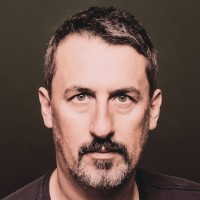
Talk: “From Analytical Signals to Intelligent Solutions: Machine Learning Applied to Chemistry, Agriculture, and Health“
Bio: Gilson Augusto Helfer holds a PhD in Applied Computing from the University of Vale do Rio dos Sinos (2022), an MSc in Industrial Systems and Processes from UNISC (2014), and undergraduate degrees in Systems Analysis and Development from ULBRA/RS (2015) and Industrial Chemistry from UNISC (1998). He is a professor and researcher at the University of Santa Cruz do Sul (UNISC), serving in the Department of Engineering, Architecture, and Computing and as a permanent faculty member of the Graduate Program in Industrial Systems and Processes.
His work focuses on mobile computing and the Internet of Things (IoT) applied to chemistry, chemometrics, agriculture, and healthcare. He conducts projects involving Machine Learning, the Semantic Web, and Natural Language Processing across various fields of knowledge. He is the developer of the ChemoStat software and the PhotoMetrix application for Android and iOS smartphones.
Janosch Ortmann Ph.D. – Université du Québec à Montréal, Canada
Webpage: https://www.gerad.ca/en/people/janosch-ortmann
Google Scholar: https://scholar.google.com/citations?user=iji4xj4AAAAJ&hl=en
LinkedIn: https://ca.linkedin.com/in/janosch-ortmann-32447338
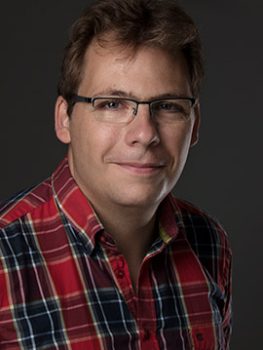
Talk: “Decision-based clustering for stochastic optimisation models“
Bio: Janosh Ortmann is a full professor of business analytics and data science at the University of Quebec-Montréal (UQAM, Canada), where he has held a post since 2017. He holds a PhD in Mathematics from the University of Warwick (UK), obtained under the supervision of Neil O’Connell, and a Master in Mathematics (MMath) from Oxford University (UK). He has held postdoctoral positions at Warwick, at the Universities of Toronto and Montreal and at Concordia University (Canada).
His research interests lie at the intersection of probabilistic modelling, optimisation and machine learning. In practice, this means translating real-world situations into mathematical models and developing solution approaches that support decision-making, in applications from logistics to personalised medicine and healthcare operations.
For his work on discrete random processes and their scaling behaviour he has been awarded two prizes, jointly with his co-authors Duncan Dauvergne and Bálint Vireag : the 2026 George Polya prize in mathematics and the 2025 Frontiers of Science award. His work is supported by grants from the Quebec Ministry of the Economy as well as Canada’s Natural Sciences and Engineering Research Council (NSERC) and Mitacs.
He currently serves as director of the Interdisciplinary Centre for Intelligent Management of Complex Systems (CRI2GS) at UQAM and is a member of the Mathematics Research Centre (CRM) and Group for Research in Decision Analysis (GERAD) in Montreal.